
Wireless audio for professional events
Up to 13 simultaneous channels for audiences of 50 to 2,500. Professional production equipment for performances in sensitive venues, multilingual conferences, and cultural and corporate events across Belgium and Europe.
How it works
The idea is simple. One or more transmitters send the audio signal over radio frequency, and the headsets pick it up in real time, with no cables. Each participant sets their own volume and chooses their channel on the headset itself.
The real challenge is how the signal travels through each venue. A museum, a listed building and an outdoor site each raise different issues. Our Sennheiser Evolution G4 and Wisycom MTK952 transmitters hold a stable signal where entry-level equipment cuts out: 150 m guaranteed, up to 300 m in optimal conditions. Everything arrives in flight cases and sets up without touching the venue itself, and our team then fine-tunes the setup to suit each location.
Professional equipment
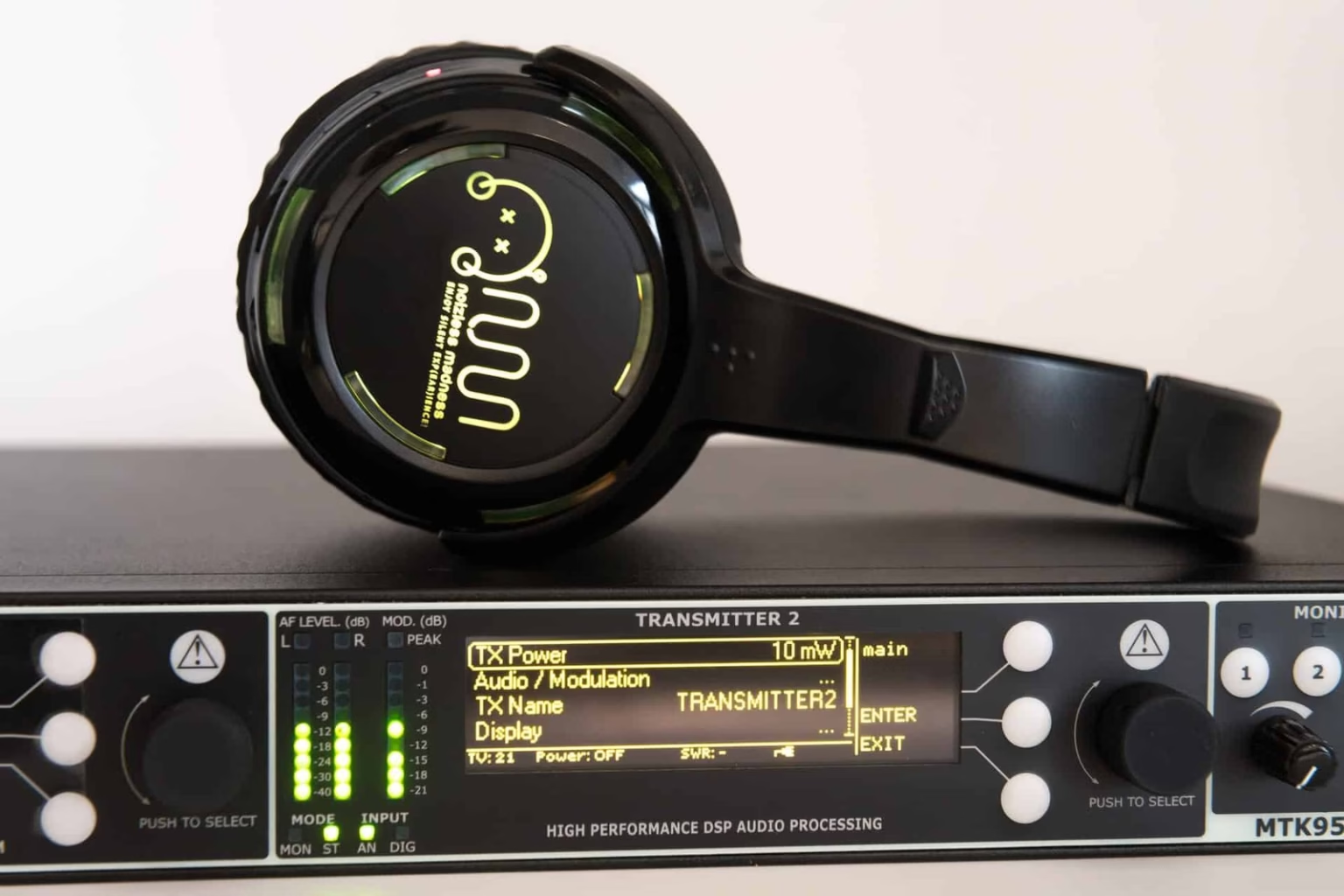
All wireless headset systems run on radio frequencies, but how reliable they are depends on the transmitters behind them. Sennheiser and Wisycom are the go-to brands for major stage productions: they keep the signal steady over long sessions, handle interference between channels and stand up to tough environments, just where consumer rental equipment starts to crackle.
Eight channels run on licence-free UHF bands across Europe, so they are guaranteed wherever your event takes place. The five extra channels use a band that is licence-free in Belgium and most European countries, but requires a licence or is unavailable in a few. For events outside Belgium, we check local regulations on a case-by-case basis.
In the most demanding venues, with reinforced concrete, water or heavily partitioned spaces, we deploy remote antennas or fibre optics, working directly with the on-site technical crew.
Multi-channel
Noizless Madness can broadcast up to 13 audio channels at the same event: 8 guaranteed anywhere in Europe, plus 5 more depending on local regulations.
Comfort & immersion
Two hours on a guided tour or a full day at a seminar is a long time to wear a headset. That is why comfort mattered as much as sound quality when we chose ours: an adjustable headband that fits every head, and soft ear cushions that keep fatigue at bay hour after hour.
Each participant sets their own volume, which matters with a mixed audience: children, people with hearing loss, or those sensitive to noise.
Analogue transmission preserves the full dynamics of the original sound with no perceptible delay: the audience hears exactly what leaves the sound desk, in real time.
Responsible events
By taking loudspeakers out of the space, wireless headsets open up venues that were once out of the question:
Looking ahead
Our system is analogue, and that is deliberate: sound reaches the headsets with no delay, which is essential whenever the audio has to stay in sync with a stage or a screen.
We are keeping a close eye on Auracast, a Bluetooth broadcast technology that sends a single audio stream to as many receivers as needed. Being digital, it promises the detail and dynamic range that come with it. Latency is still the sticking point: unnoticeable during a conference or a silent disco, it remains audible when musicians play live. We are evaluating the first devices with our technical partners.
Binaural sound is another path we are exploring. Recorded or mixed to mimic the way our two ears perceive space, it gives headsets genuine depth: in immersive theatre, an actor seems to whisper right behind you, then their voice drifts away at your back. At an exhibition or a sound installation, the audience no longer just listens to a story, they step inside it.
References & technical case studies
Noizless Madness has been equipping events since 2013 in Belgium, France and across Europe, more than 150 to date. Here are a few recent setups, each with its own set of constraints.
For the most demanding setups, we team up with RF Transmission, a Belgian radio frequency specialist serving the events industry since 1995.
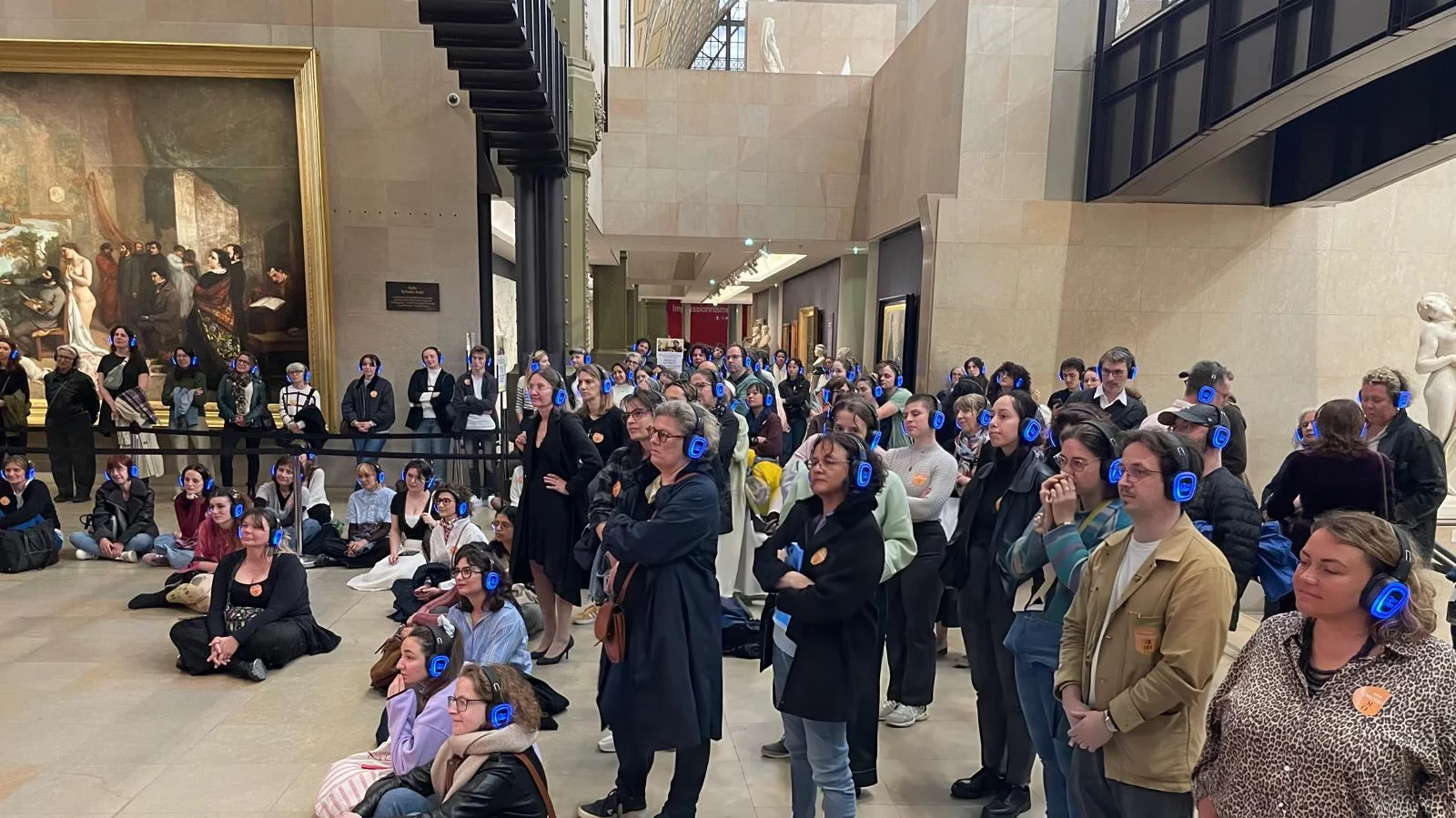
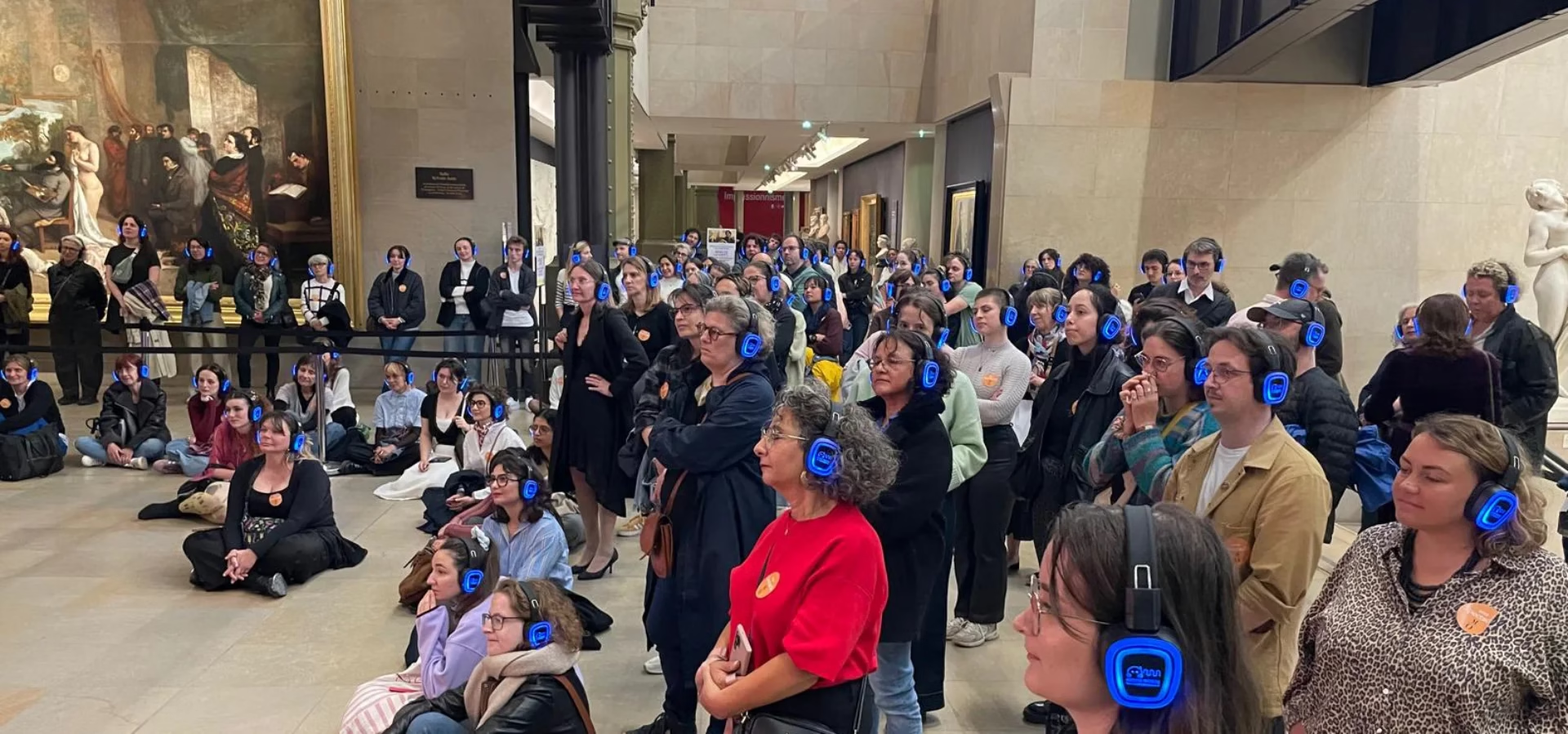
Silent Slam by Félix Radu for the “Renoir and Love” exhibition. We ran fibre optics through several galleries to hold the signal, working hand in hand with a technical team that applies very strict protocols in a venue of this kind.
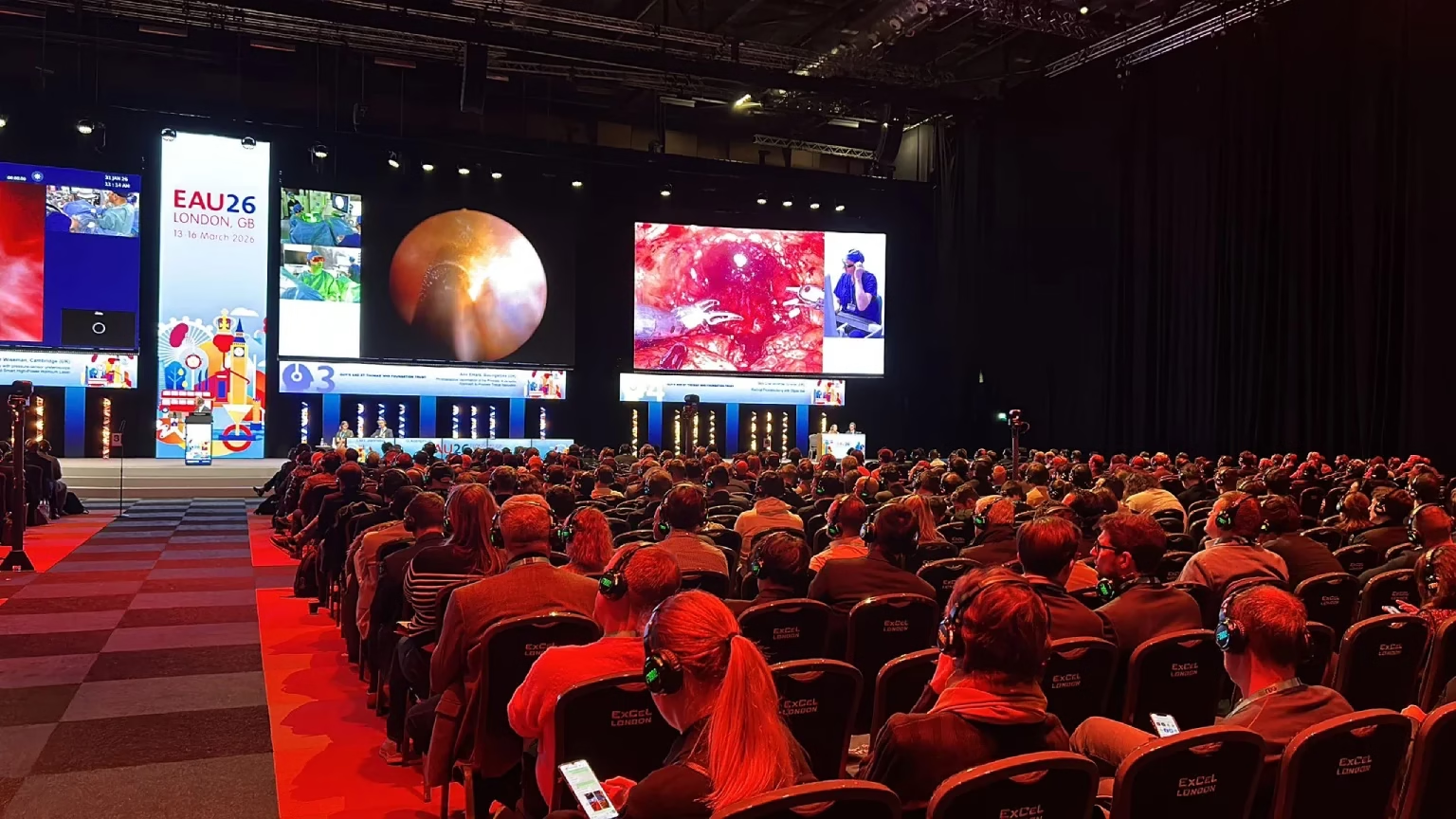
European Association of Urology congress, March 2026. 2,500 delegates followed live surgery demonstrations, with each procedure broadcast on its own channel. The system ran at full capacity: 13 simultaneous channels in a static setup.
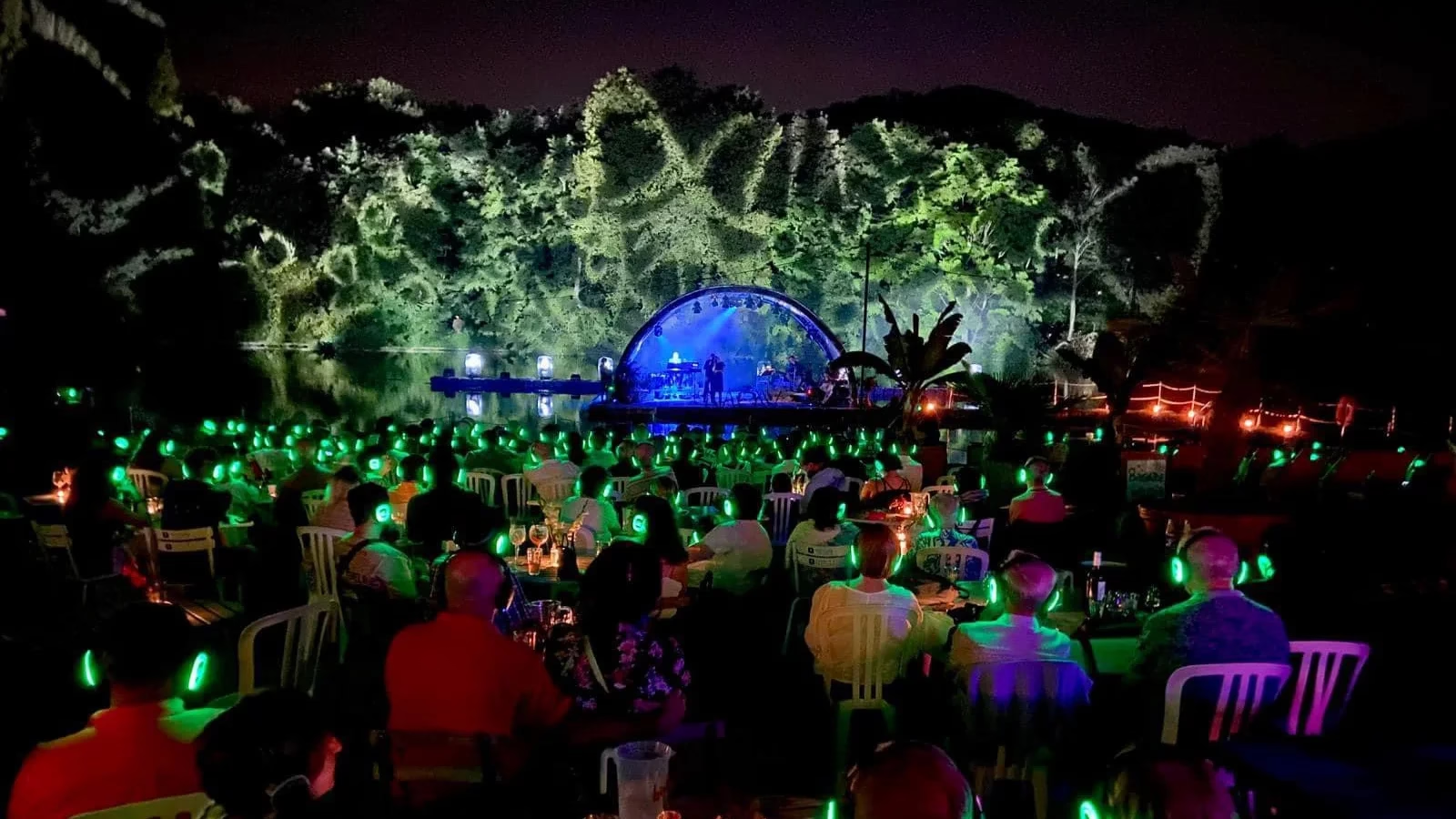
A festival of poetry and sound art on the water. Performers appear on a platform moored on the Meuse, while the audience listens on headsets from the riverbank, beneath the old Jambes bridge and in the gardens of the Citadel.
Museums, brands and event agencies, including DDMC, which entrusts us with the audio for its corporate events.



FAQ
Yes. Professional UHF transmission stays stable through thick walls, absorbent materials and complex layouts. In particularly challenging venues, we can add remote antennas or fibre optics. Noizless Madness has notably equipped the Trocadéro aquarium in Paris, one of the toughest environments there is for radio propagation.
Yes, that is exactly what the system is built for. The performer’s microphone feeds the transmitter, and the sound reaches every headset in real time, with no perceptible latency. This is how the Silent Slam at the Musée d’Orsay works.
Yes. The UHF band is unaffected by Wi-Fi networks, Bluetooth or a crowd of mobile devices. That is a decisive advantage in connected conference rooms and busy museums.
At least 9 hours for the Standard, 12 hours for the Club Ultra Bass HD.
It is different, not inferior. Listening on headsets removes the venue’s acoustic issues, such as echo and reverberation, which consistently degrade speaker sound in untreated spaces.
Let’s work out the right setup together.