
Wireless audio for live performance
A performance among the artworks, a sound piece in the open air, a walk through the city, a late opening that must not disturb the galleries next door. Since 2013, Noizless Madness has been equipping live performance and cultural venues with wireless headsets, for audiences of 50 to 2,500, in Belgium and across Europe.
The challenge
A museum is not a concert hall. Buildings are often listed, sound levels are capped, and the neighbouring galleries stay open to the public during the event. Installing speakers there is complicated, sometimes impossible.
Outdoors, the problem is a different one. Sound disperses, the wind distorts it, and sooner or later the neighbours complain. Wherever you are, the audience is mixed: children, people with hearing loss, visitors who are sensitive to noise, several languages.
With headsets, the sound no longer travels through the space: it goes straight to each listener’s ears. The venue stays quiet, and everyone hears every detail.
Formats we equip
Up to 13 simultaneous audio channels: 8 guaranteed throughout Europe, 5 more depending on local regulations. For the details, see our technology.
How it works
Transmission is analogue, so the sound reaches the headsets with no perceptible delay. That is essential for staying in sync with an actor, a musician or a projected image. Range is 150 m guaranteed, up to 300 m in optimal conditions.
On the most demanding setups, we work with RF Transmission, a Belgian specialist in radio frequencies for events since 1995.
Past projects
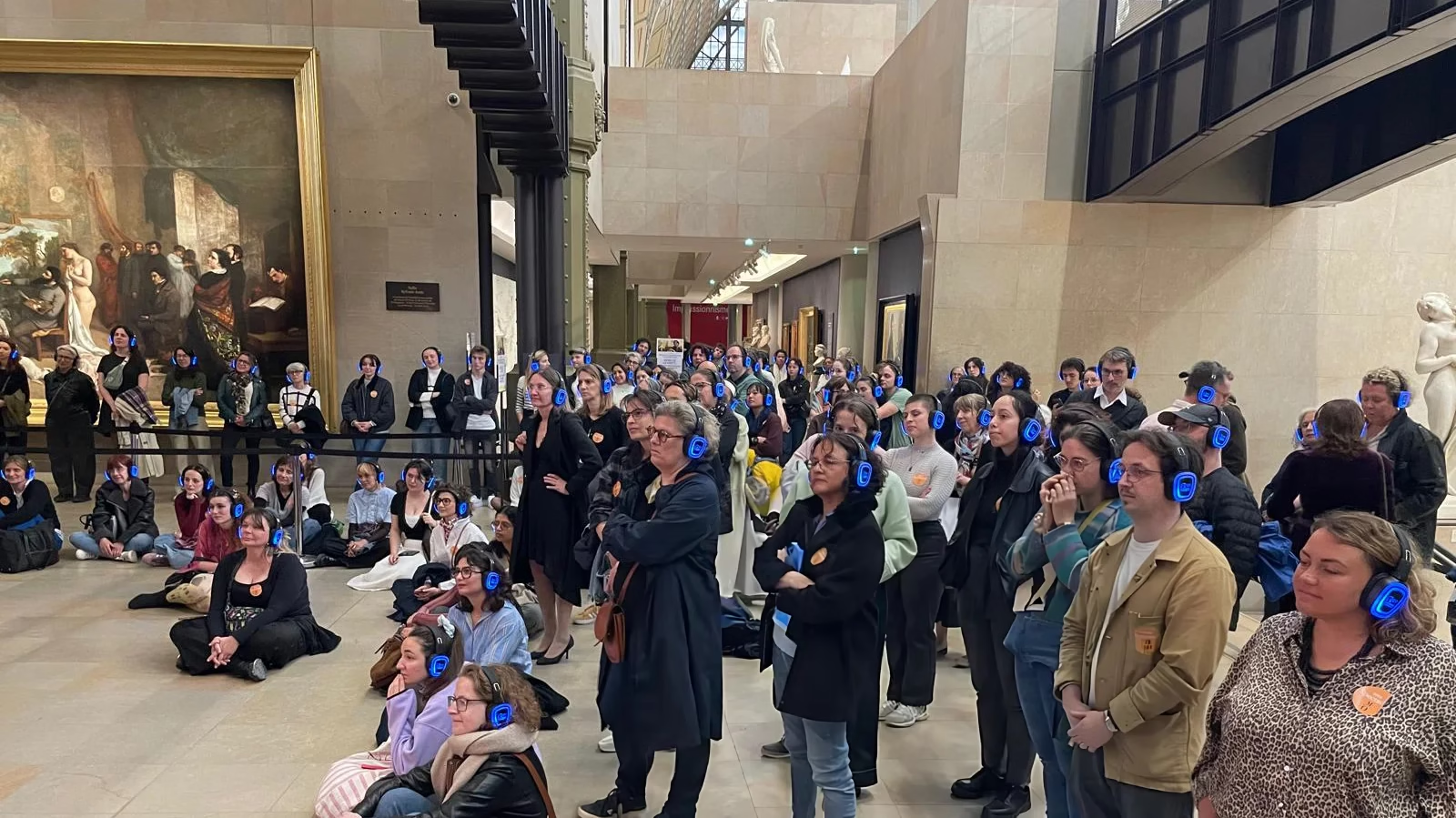
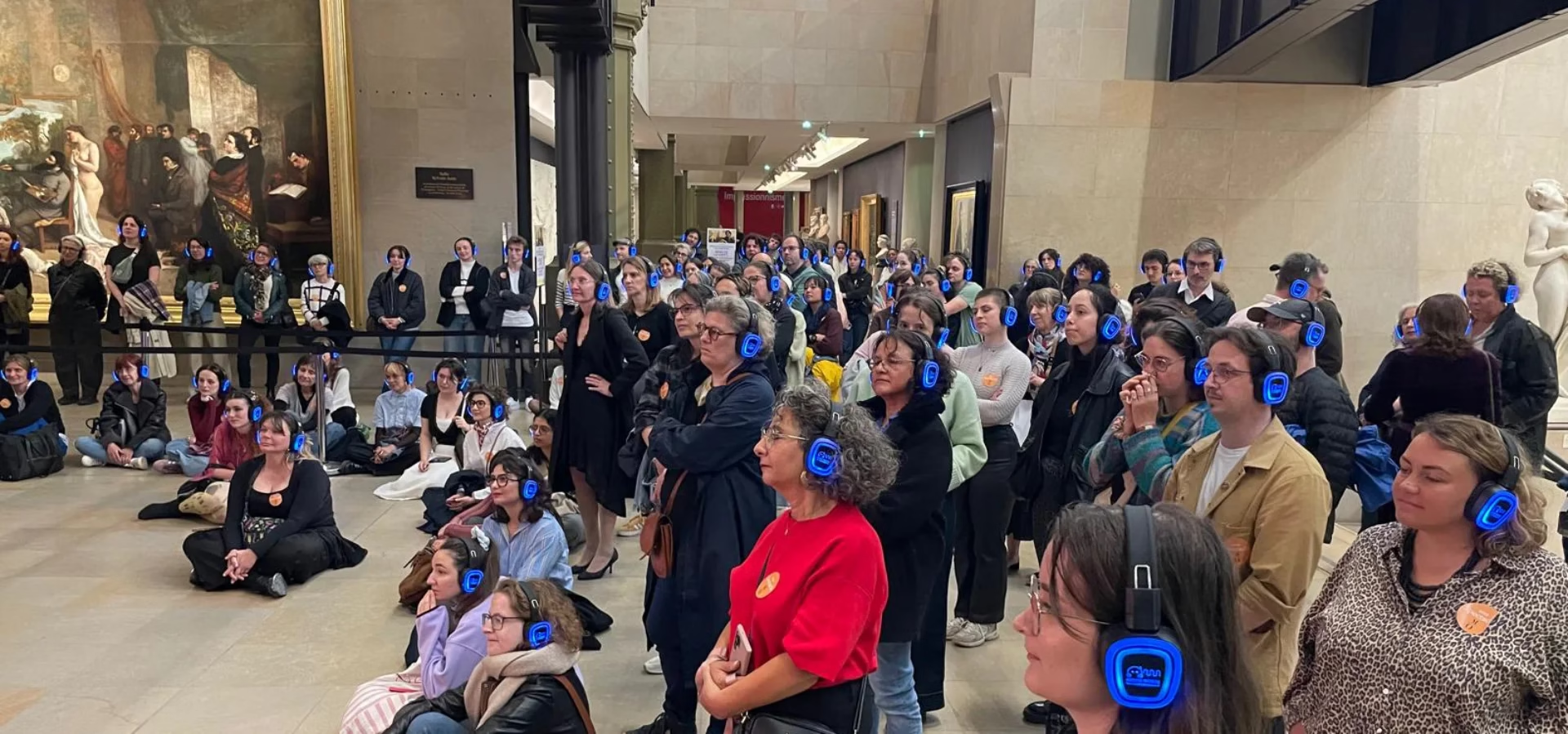
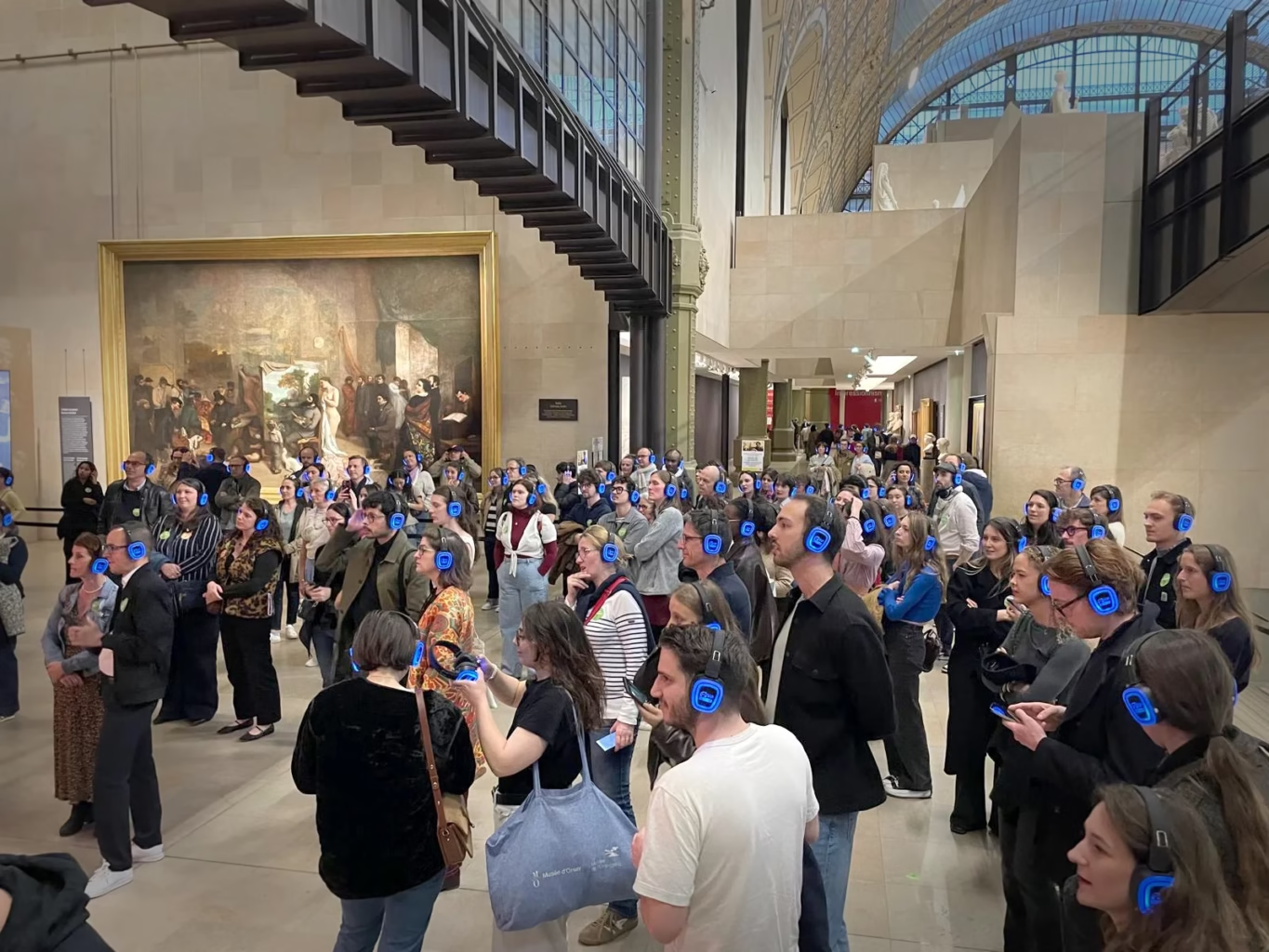
Félix Radu’s Silent Slam for the exhibition “Renoir et l’Amour”, for an audience of 700. Fibre optics were run through several rooms to hold the signal, in coordination with a technical team that was very strict about the venue’s protocols.
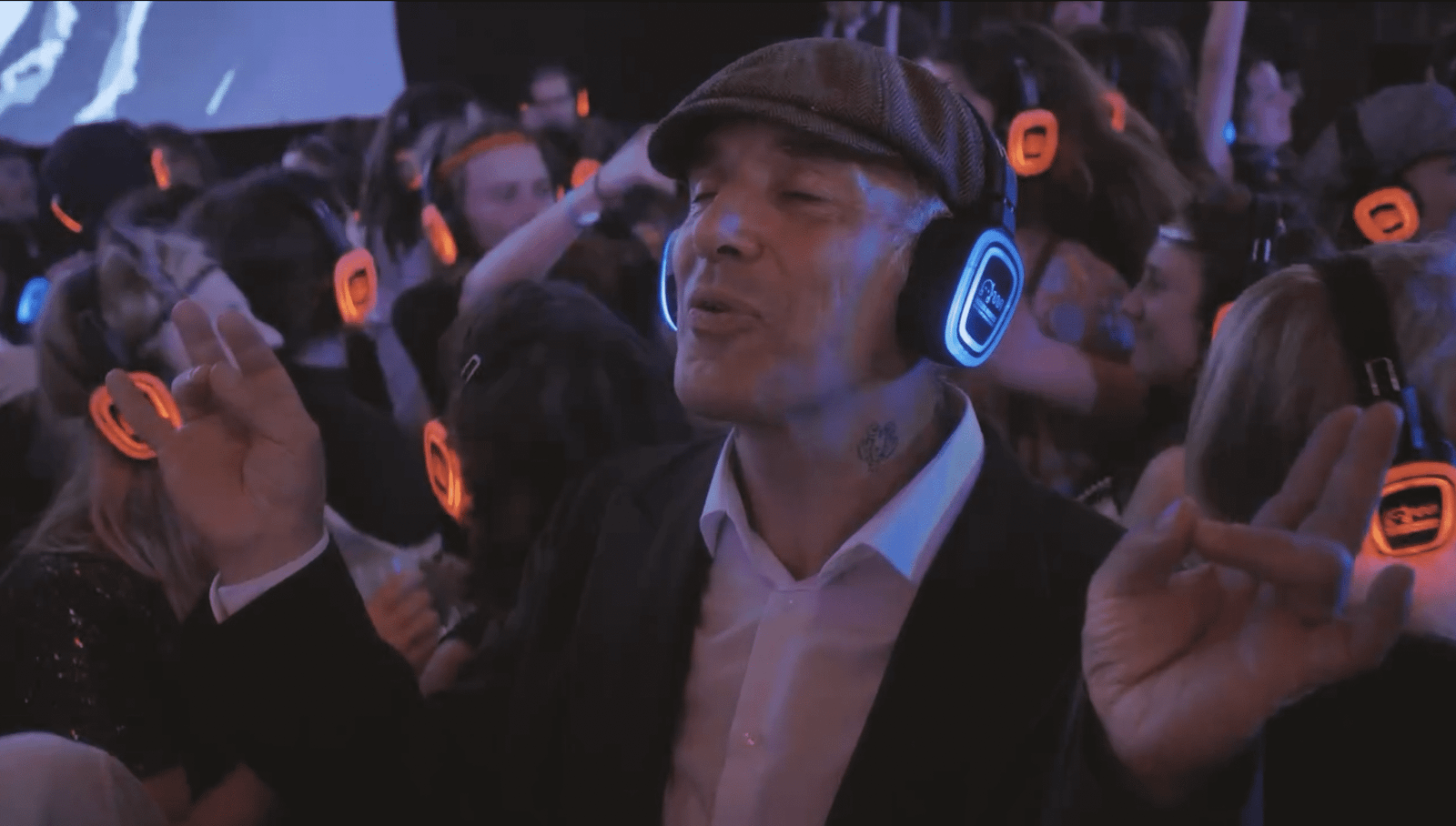
Electro swing festival at the Parc à Mitrailles. For seven editions, Noizless Madness equipped its silent disco, running on several channels.
“Such a pleasure working with passionate people and developing completely unconventional concepts.” Arnaud de Brye, Jyva’Zik Festival
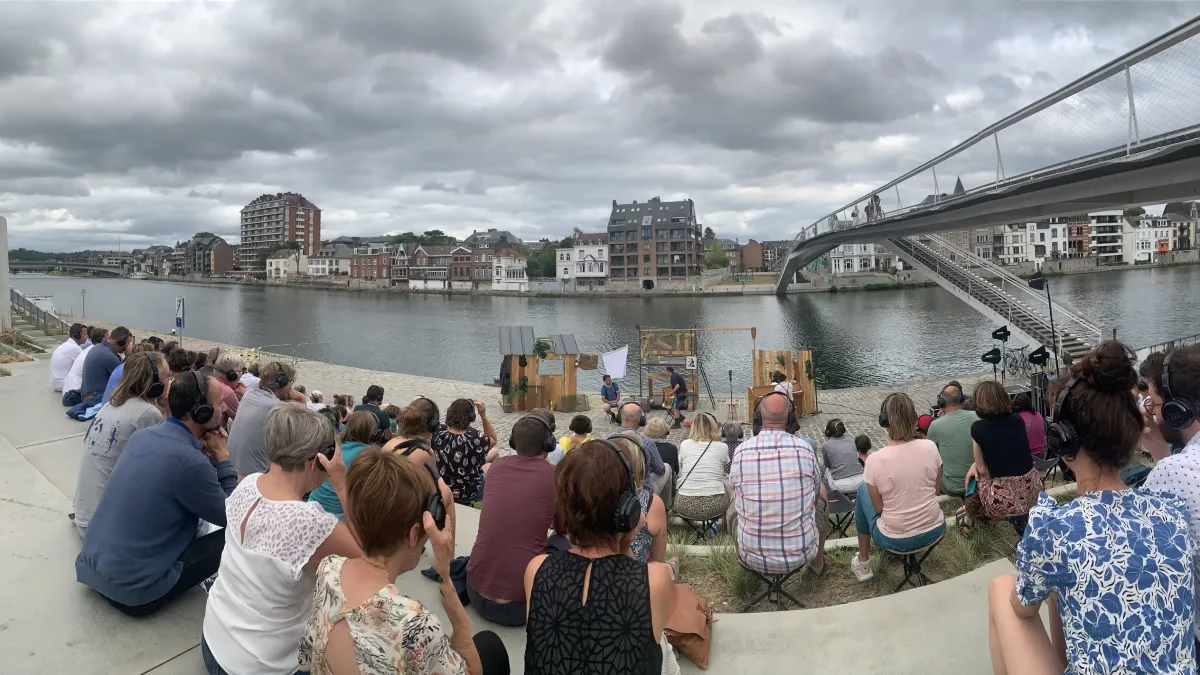
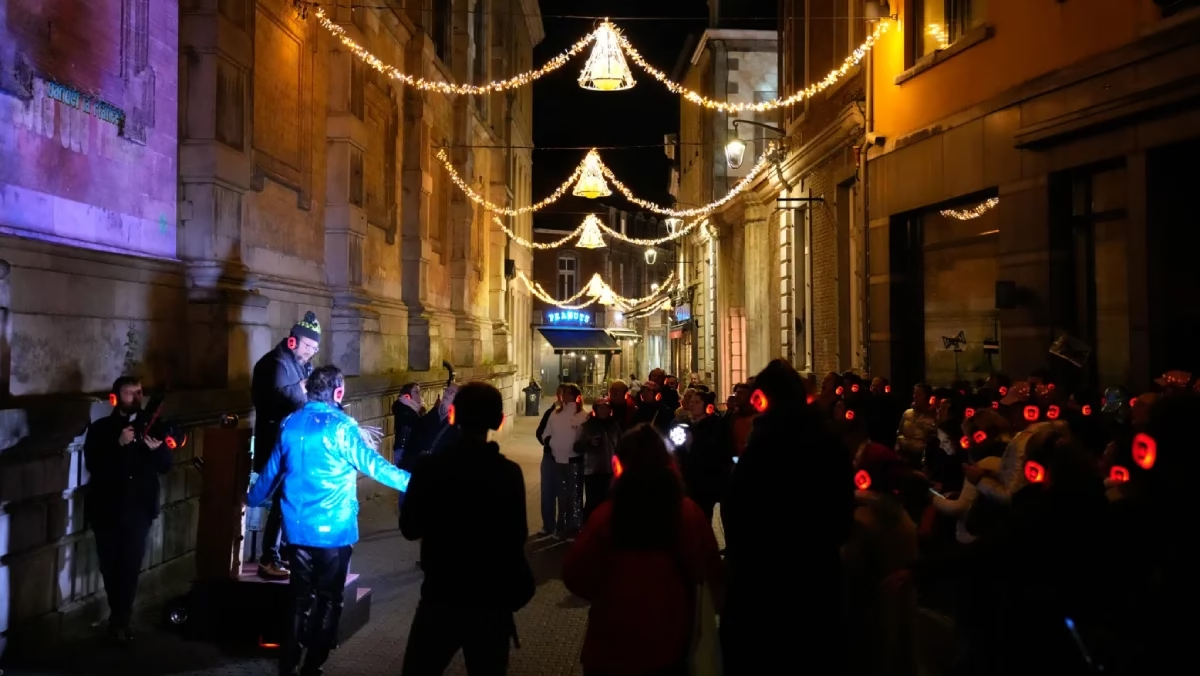
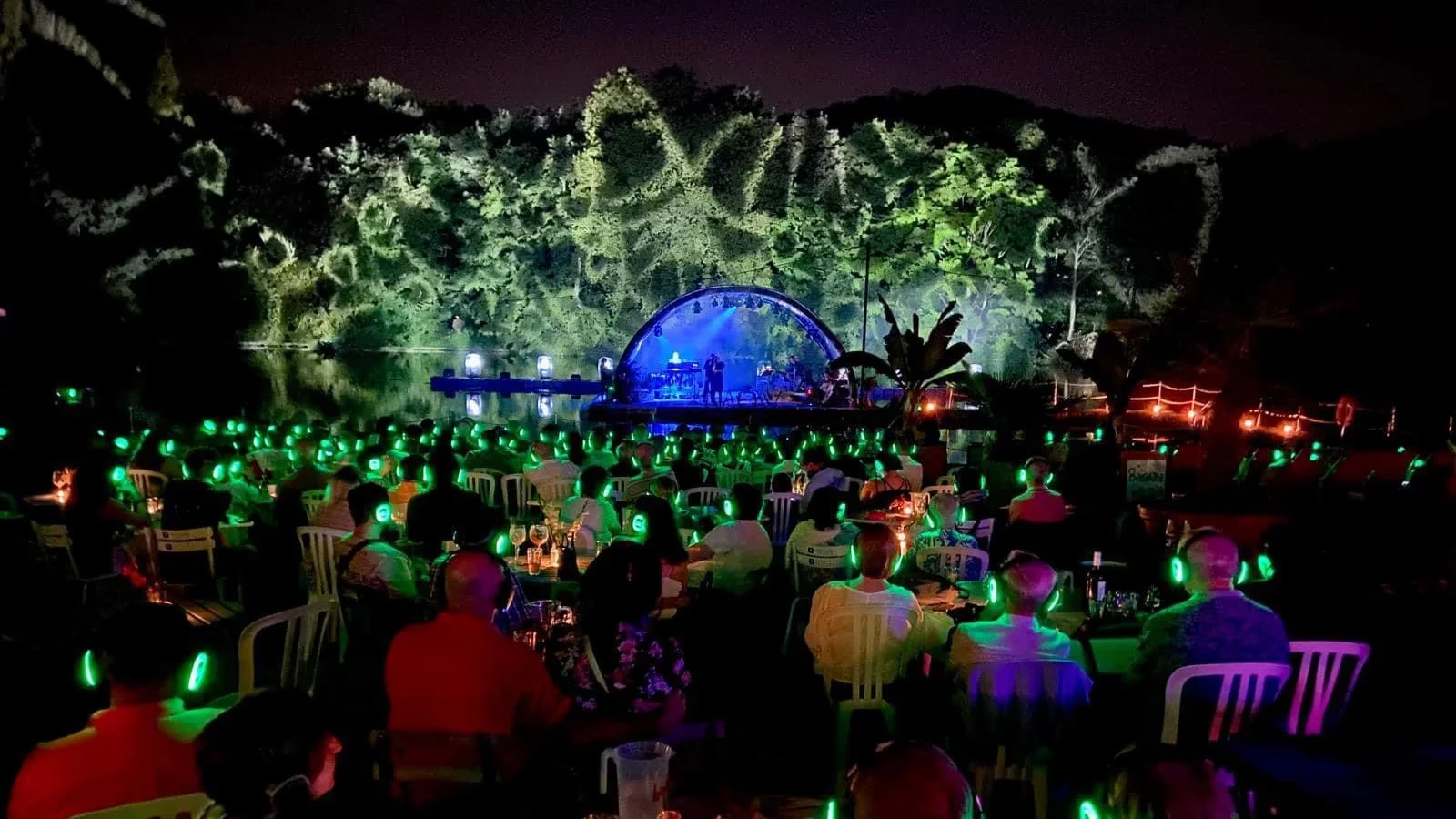
A festival of poetry and sound art on the water. The performers play on a platform moored on the Meuse, and the audience listens on headsets from the riverbank, up to 650 people per evening.
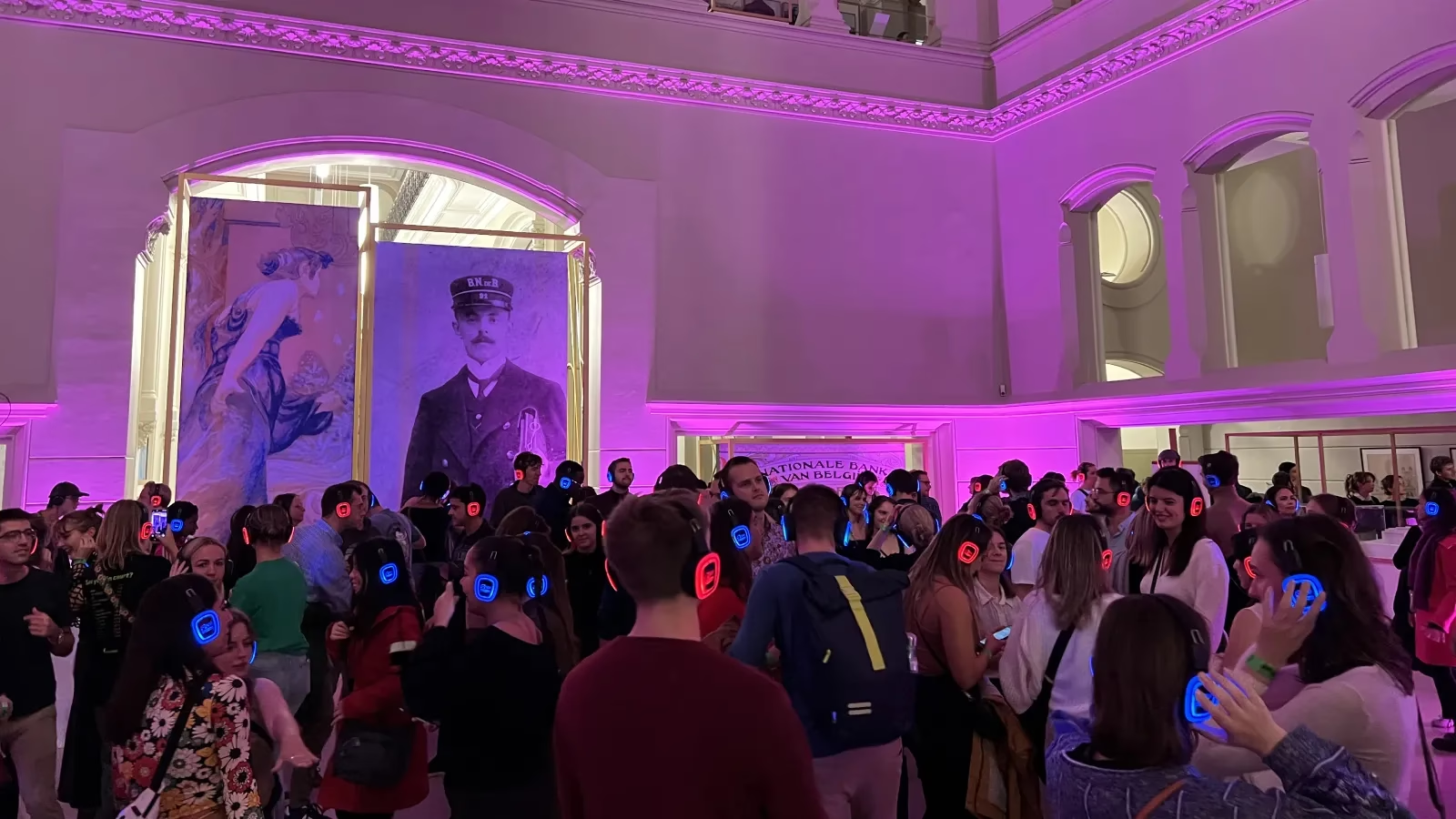
Silent disco in the museum’s atrium, with two mixes playing in parallel. Each visitor chose their channel, while the collections stayed open. See the museum’s page.
“Before using the headsets for cultural events in the heart of the Museums’ galleries, I thought they would create distance between the audience and the artists or speakers. Quite the opposite: the listening experience is ten times more intense.”
Géraldine Barbery, Head of Education, Royal Museums of Fine Arts of Belgium



From the Musée d’Orsay to the Louvre, from the National Bank of Belgium to the Royal Museums of Fine Arts of Belgium, they have put their trust in us.
FAQ
Yes. UHF transmission passes easily through thick walls and absorbent materials. In the most demanding venues, we deploy remote antennas or fibre optics, as we did at the Musée d’Orsay and at the Trocadéro aquarium in Paris. The installation requires no work on the building.
Yes. The guide wears a microphone connected to a belt-pack transmitter, and every participant hears them on their headset, so the guide never has to raise their voice. Several groups can move around the museum at the same time, each on its own channel, without disturbing one another.
Not the transmitted sound. It only goes into the headsets, and no speaker plays into the space. Only sounds produced live, such as an actor’s voice, can be heard nearby.
Yes. Each audience member sets their own volume on the headset. A child, a person with hearing loss or a visitor bothered by noise can find the level that suits them, without imposing anything on anyone else.
Yes. Each language has its own channel and visitors pick theirs on the headset, with no interpretation booth. Up to 13 channels depending on the country, 8 of them guaranteed throughout Europe.
Yes. Transmission is analogue and the sound arrives with no perceptible delay, so it stays in step with an actor, a musician or a projected image.
No, and that’s deliberate. An audio guide plays recorded content on demand. Our headsets carry the live voice of a guide, an actor or a musician, as they speak. For a self-guided visit with recorded content, an audio guide is still the right solution.
Every time, with a mild disinfectant and antibacterial cleaning product.
Ideally at least a month ahead, depending on the number of headsets. If your date is sooner, get in touch anyway: it all depends on the volume and our schedule.
Tell us about the venue and the format, and we will suggest a setup that fits.